Demolition inert waste recycling has become one of the most strategic activities in the construction and environmental recovery sectors. Growing attention to sustainability, circular economy principles, and the reduction of disposal costs has made the recovery of construction and demolition waste an essential practice for contractors, construction sites, and industry operators.
Through advanced crushing and screening technologies, materials generated by demolition activities can be transformed into valuable reusable resources, reducing landfill disposal and enhancing materials that were once considered simple waste.
CAMS solutions for inert waste recycling optimize the entire recovery process, improving productivity, sustainability, and regulatory compliance.
What Is Demolition Inert Waste?
Demolition inert waste consists of materials generated during demolition, renovation, and construction activities.
The main recoverable materials include:
- concrete;
- reinforced concrete;
- bricks and masonry;
- asphalt;
- natural stone;
- ceramics;
- mineral construction residues;
- mixed construction debris.
When properly processed, these materials can be transformed into recycled aggregates suitable for various applications, including:
- road sub-bases;
- infrastructure projects;
- backfilling operations;
- civil construction;
- urban development works.
Recovering inert materials provides a practical solution for reducing the consumption of virgin raw materials and lowering operating costs.
The Construction Debris Recycling Process
The recycling process for construction and demolition waste consists of several stages aimed at transforming demolished materials into reusable aggregates.
Collection and Material Sorting
The first stage involves separating recoverable materials from contaminants and unsuitable components.
Proper initial sorting improves:
- the quality of recycled materials;
- production efficiency;
- processing cost reduction.
Crushing of Inert Materials
Using crushing plants, materials are reduced to specific sizes suitable for subsequent applications.
Crushing enables the production of controlled and uniform aggregate sizes.
Screening and Separation
The material is then screened and separated to remove impurities and classify recycled aggregates according to size.
Reuse of Recycled Materials
The resulting aggregates can be reused directly on construction sites or employed in industrial and infrastructure applications.
Technologies Used in Inert Waste Recycling
The efficiency of construction debris recovery largely depends on the technologies employed.
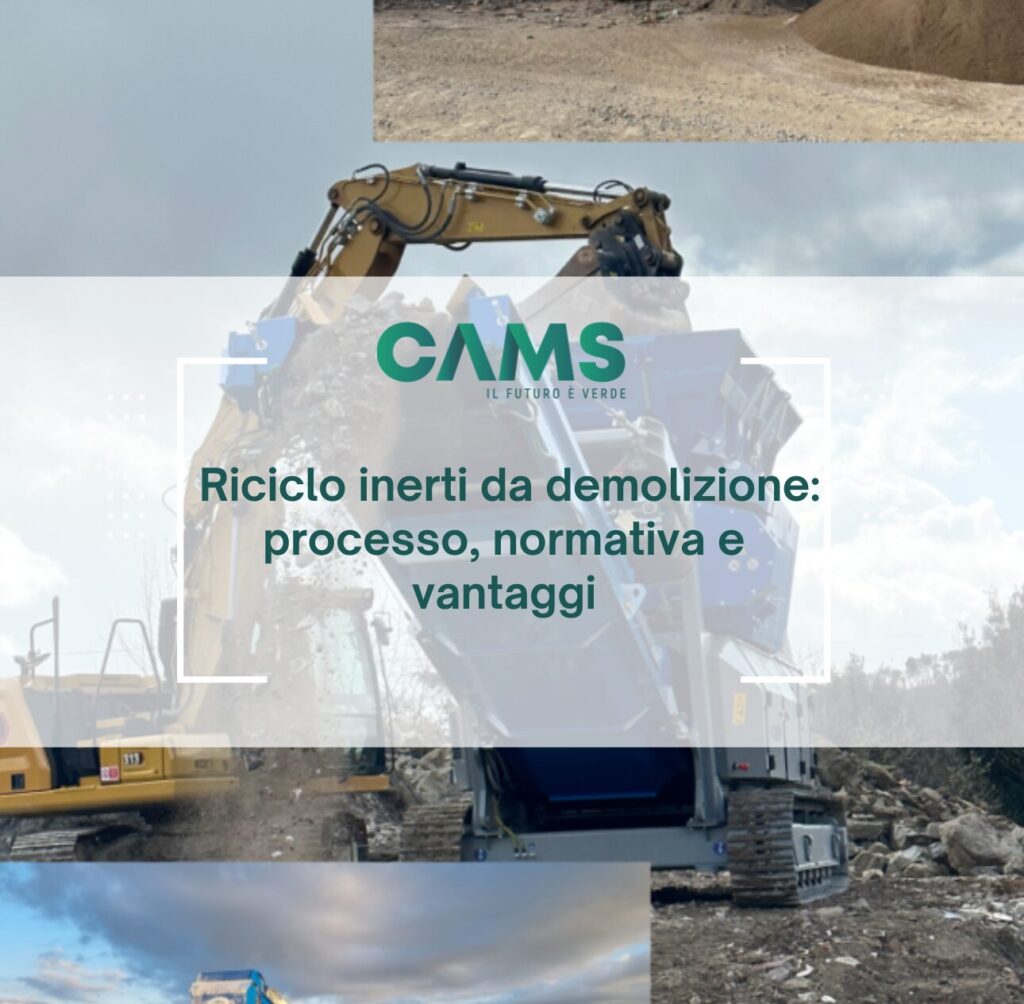
CAMS develops advanced solutions for processing demolition inert waste, designed to deliver high operational performance.
Mobile Crushing Plants
Mobile plants allow materials to be processed directly on-site, reducing:
- logistics costs;
- transportation requirements;
- management time;
- environmental impact.
They are particularly suitable for urban demolitions and temporary construction projects.
High-Efficiency Screening Systems
Modern screening technologies enable precise separation of different particle sizes, improving the final quality of recycled aggregates.
Material Separation Technologies
Magnets, separators, and automated systems remove metals and impurities, increasing the value of recovered materials.
On-Site Recycling vs. Fixed Recycling Plants
Inert materials can be recovered either directly on construction sites or at dedicated recycling facilities.
On-Site Recycling
This approach allows companies to:
- reduce transportation costs;
- speed up operations;
- lower emissions;
- optimize site management.
Mobile plants are the ideal solution for temporary projects and localized demolitions.
Recycling at Fixed Plants
Centralized facilities are suitable for large material volumes and continuous, high-capacity operations.
They provide industrial-scale process management and consistently high quality standards.
Regulations Governing Inert Waste Recycling
European and Italian regulations encourage the recovery of construction and demolition waste to reduce the environmental impact of the building sector.
Recycling inert materials enables companies to:
- comply with environmental obligations;
- reduce landfill disposal;
- support the circular economy;
- improve corporate sustainability.
Proper management of construction debris requires compliant plants, material traceability, and certified recovery processes.
In Italy, the main regulatory framework is Legislative Decree 152/2006 (Environmental Code), which governs waste management, recovery, and traceability while introducing the End-of-Waste principle for recycled aggregates.
An important role is also played by Ministerial Decree 152/2022, which establishes technical criteria for recovering construction and demolition inert waste, defining quality requirements, controls, and permitted uses of recovered materials.
At the European level, Directive 2008/98/EC promotes material recovery and construction waste recycling to reduce the environmental impact of the construction sector.
Compliance with these regulations helps companies improve sustainability, environmental performance, and competitiveness in public tenders based on Green Public Procurement criteria and certified recycled materials.
Economic Benefits of Inert Waste Recycling
Recovering demolition waste provides significant economic advantages for construction companies and environmental operators.
Reduced Disposal Costs
Material recovery helps decrease:
- landfill fees;
- transportation expenses;
- purchases of virgin raw materials.
Recovery of Reusable Raw Materials
Recycled aggregates can be reused in multiple applications, transforming disposal costs into productive resources.
Increased Competitiveness
Companies investing in sustainability and material recovery strengthen their market position and improve opportunities in public procurement projects.
Environmental Benefits and Sustainability
Construction debris recycling contributes directly to environmental protection.
Its main benefits include:
- reduced landfill waste;
- lower extraction of natural resources;
- decreased CO₂ emissions;
- reduced environmental impact of construction activities;
- enhanced resource efficiency.
The recovery of inert materials is one of the foundations of modern sustainable construction.
How to Optimize Construction Debris Recovery
Achieving an efficient recycling process requires proper management of demolished materials.
Plan Material Separation
Proper segregation improves recovery quality and reduces processing costs.
Use Appropriate Technologies
Plant selection should consider:
- material type;
- required productivity;
- operational mobility;
- desired final particle size.
Minimize Contamination
The presence of unsuitable materials may compromise recycled aggregate quality and increase management costs.
Common Mistakes in Demolition Waste Management
Poor management of construction debris can result in high costs, operational delays, and regulatory issues.
Common mistakes include:
- inadequate material separation;
- use of unsuitable equipment;
- inefficient debris transportation;
- lack of quality control;
- non-compliance with environmental regulations.
Advanced technologies and specialized partners help optimize the entire recovery process.
Why Choose CAMS for Inert Waste Recycling
CAMS develops innovative solutions for processing and recovering construction and demolition waste, offering:
- high-performance mobile plants;
- reliable and durable technologies;
- superior productivity;
- reduced energy consumption;
- specialized technical support.
CAMS solutions are designed to maximize material recovery and enhance the sustainability of construction operations.
FAQ
What are demolition inert materials?
Demolition inert materials are waste materials generated by demolition and construction activities, including concrete, bricks, asphalt, and recoverable construction debris.
How does construction debris recycling work?
The process involves collection, sorting, crushing, screening, and the reuse of materials transformed into recycled aggregates.
What are the advantages of inert waste recycling?
It reduces disposal costs, recovers reusable materials, minimizes environmental impact, and improves the sustainability of construction projects.
Is it possible to recycle inert materials directly on-site?
Yes. Mobile plants allow construction debris to be processed directly at the demolition site, reducing time and logistics costs.
Which regulations govern inert waste recycling?
European and national regulations encourage the recovery of construction and demolition waste to promote circular economy principles and environmental sustainability.
Which materials can be recovered from demolition activities?
Concrete, reinforced concrete, bricks, asphalt, stone, and other construction-related inert materials can be recovered.
Why choose professional recycling plants for construction debris recovery?
Advanced technologies ensure higher productivity, better recycled aggregate quality, and full compliance with regulatory requirements.
Cams “IL FUTURO È VERDE”